Monday, November 30, 2009

Swiss Minaret Ban: Bravo Switzerland!

The day when a church can ring its bell on Sunday from atop its belfry, or a synagogue can worship in peace, or atheists can be free to worship nothing, or Hindus or Buddhists can pray in their temples, in places like Saudi Arabia, Iran, the United Arab Emirates and other fucking Fascist Islamic lands around the world;

The day when a huge Christian Cathedral can be built in Mecca - similar to the gigantic mosque (the largest I am told) that Muslims built in Rome itself;

That will be the day when I will criticize Switzerland for banning minarets.

Until then, fuck the minarets, fuck Islam, and BRAVO SWITZERLAND and THANK YOU.

Hanibaal

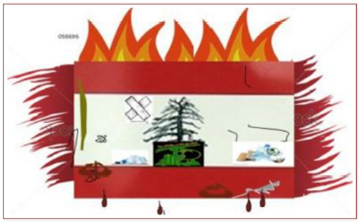
Lebanon: Superficial Fancytown vs. Misreable Shantytown

ECONOMY-LEBANON: Skewed Policies Widen Urban-Rural Divide
By Mona Alami

BEIRUT, Nov 30 (IPS) - The luxury brands and fashion powerhouses that line the streets of the Lebanese capital seem to suggest that this country is enjoying an hour of glory as the world is in the throes of a severe recession.

Reality is different. Away from downtown’s glittery sidewalks, people live in abject poverty, begging on the streets throughout the country’s main cities.

In stark contrast to the opulent cobblestone streets of the Beirut Central District, home to the likes of Fendi, Gucci and Cartier, in one of the back alleyways off the main Arab University road, a man in his sixties, lives out of his rundown, old car.

"Since my son died and I lost my job at a local plastic plant, I have been living off the streets," says Hassan, who begs on the streets to survive.

According to a study published in 2008 by the United Nations Development Programme (UNDP), extreme poverty rates are at about eight percent in Lebanon.

"People living under the line of extreme poverty spend less than 2.4 US dollars per day, which means that they can’t afford even the most basic of food needs," underlines Raghed Assi, poverty programme manager at the UNDP.

Another 20 percent of the Lebanese population lives under the upper poverty line, meaning that they have less than four dollars to spend per day.

As one drives out of Beirut and into the beleaguered suburbs of Tripoli, Lebanon’s second largest city, the sight of decrepit buildings inhabited by populous families is common.

Ali, a member of the Alawite community (a Muslim minority) residing in Jabal Mohsen, explains: "I have been out of a regular job for over three years. I work part time as a mechanic in one of the city’s garages and barely earn enough to feed my family."

The UNDP study has put forth significant disparities between the poverty levels in various Lebanese regions. "For example, less than one percent, or more specifically 0.67 percent of Beirut residents, live under extreme poverty levels, while this figure reaches 17 percent in the north, 11.64 percent in the south, and 10.81 percent in the Bekaa area. Another 5.85 percent of the capital’s population lives under upper poverty levels, while this figure climbs up to 52.57 percent in the north and 42.21 percent in the south," points out Assi.

Yearly per capita expenditure reaches 2,650 dollars in Beirut, plummeting to 1,688 dollars in the north and 2,000 dollars in the south. "Pockets of poverty also exist in areas like Denniyeh, Akkar and Minieh in the north as well as around the suburbs of Beirut," says Assi.

The UNDP programme manager explains that the disparity in poverty levels can be partially linked to government policies which benefit the Lebanese capital in comparison to other regions, providing investors in Beirut with more incentives and facilities.

"The infrastructure is actually stronger and more reliable in Beirut in terms of water and electricity supplies. Tax cut incentives are also given to investors in the capital instead of other regions," Assi adds.

Economist Ghazi Wazni attributes several other reasons to the significant regional disparities. "Lebanon’s political instability and permanent bickering slow down growth and discourage investors from coming to Lebanon. It has prohibited the implementation of the 2007 reforms envisioned by the Paris III conference, which targeted poverty pockets through the enactment of new social, economic and educational policies.''

The growing deficit plaguing Lebanon, reaching nearly 50 billion dollars in debt, further exacerbates the problem. "Many of the reforms have been postponed because of the lack of funds, as about 45 percent of the government’s yearly budget is earmarked for servicing the debt. However, only 46 million dollars are needed to alleviate the state of extreme poverty in Lebanon," Wazni says.

Another reason accounting for Lebanon’s current poverty problem is low income levels. The average salary in the country has not been adjusted in accordance with galloping inflation (projected at eight percent for 2010) and the erosion in consumer spending. "This is more significant in less stable sectors, such as the agriculture and manufacturing industries," says Assi.

In the years before the 1975-1990 Civil War, Lebanon was one of the rare countries in the Middle East with a thriving middle class, but the UNDP study shows that today that is no longer the case.

"The growing disparity between the rich and poor can be attributed to the civil war as well as the economic policies adopted after the 1990 Taef Accord, which concentrated essentially on the real estate and service sectors while marginalising a big portion of the population not working in these two specific economic segments," pinpoints Wazni.

He goes on to add that about 10 percent of the population controls 70 percent of the country’s wealth. According to Assi, 20 percent of the population accounts for 43 percent of national consumption.

The reality of the Lebanese political system, built on allegiance to war lords and tribal figures who perceive revenue generating ministries as their personal piggybanks, only aggravates the problem of poverty. "In some Lebanese regions, any individual or government investment effort is systematically hindered by the local zaim (lord) in order to keep a tight rein on the local population," says one researcher on condition of anonymity.

With the government turning a blind eye to poverty in Lebanon, a large percentage of the population is left to live without sufficient basic needs, such as food, water and electricity.

Meanwhile, Beirut continues to bustle with activity and prosperity, crowded with big spenders and tourists who seem not to know or care how people live beyond the capital’s fancy streets.

Sunday, November 29, 2009

Walid Phares: Failure of Vision

In expressing surprise (see interview below) at his so-called "anti-Syrian" friends' reversal to their old pro-Syrian natures, Walid Phares fails to admit is his own failure and the failure of his own ideas. When the opportunity came knocking in the post September 11 era, particularly in 2005 (Hariri assassination and the Syrian withdrawal), Mr. Phares – the "Professor" – chose to support the same traditionalist, feudal, big finance warlords that caused the problem in the first place and who were now suddenly parading themselves as "liberators" and "anti-Syrian", and "pro-Western" and so on. They were like the willow that bends in the wind of the post-September 11 era, but who deep down never really abandoned their anti-Western, pro-Arabism, self-serving narrow financial and feudal power-base interests. And now that they have shown their true colors, Mr. Phares is playing surprised at their turnabout back into Syria's arms. Shouldn't he, the "thinker" have known better? Shouldn’t he, the long time student of the Lebanese War and its genesis, have known that the ilk of Jumblatt, Hariri, Siniora (on the Muslim side) and Gemayel and Geagea (on the Christian side) were lying when they suddenly discovered Lebanese nationalism after 30 years of cowing to the Syrians and collaborating with them?

Instead of seizing the opportunity of a renewed American and Western interest in Lebanon to push forward a secularizing, progressive, and truly modernizing effort to bring Lebanon out of its antiquated governance; instead of forcing the issue that has been used for 30 years to keep Lebanon a scapegoat of the Arab-Palestinian conflict, namely for Lebanon to make peace with Israel like all the Arabs were doing, such as Egypt, Jordan, the Palestinians, etc..., Mr. Phares chose to support the pre-war order which consisted in resurrecting the political power of the traditionalists, the feudal warlords who not only caused the problem in the first place, but who could never be agents of genuine change that would extricate Lebanon from the claws of Syria, Iran, and Hezbollah, as well as a colluding US State Department and its Israeli friends who had been trying for decades to give Lebanon to the Palestinians as a substitute homeland, thus clearing the way for a resolution of the Israeli-Palestinian conflict on the back of Lebanon? Instead of adopting a bold, forward-looking outlook for Lebanon, Mr. Phares chose to support obsolete leaderships who wanted to maintain their grip on power by enabling Lebanon's enemies to keep the country as the crucible of everybody else's wars that conveniently allowed those enemies to wage their wars by proxy, keep their own hands clean and countries stable, but keep Lebanon in the agony of the past 40 years.

Even as he blasted – rightfully – Islamic Jihadism and all the dangers it posed to a stable world – Mr. Phares not once did call for Lebanon and his March 14 friends to engage Israel in negotiations, reach an agreement over the Shebaa Farms, and thus pull the rug from under Syria, Iran and Hezbollah. Mr. Phares was attacking his enemies, but never had a vision for what was to come after Syria, Iran and Hezbollah were defeated. Not once did he explain what Lebanese democracy ought to be about. He either never thought that far, or, as I suspect, he favored a return to the traditionalist, feudal and notable-based political order in Lebanon governed by antiquated religious and sectarian divisions of power that plague Lebanon, Iraq, and all the countries of the Middle East.

On the Muslim side, Mr. Phares supported the same traditionalists who actually were the engineers of the Syrian takeover of Lebanon and who collaborated with Syria for 30 years, while attacking the West and everything it represented in Lebanon. Those were the people (Jumblatt, Hariri etc.) who either themselves, or their political progenitors of a couple of decades earlier (Salam, Solh, Karami, Kamal Jumblatt, etc), supported Arabism against Lebanese nationalism, supported the PLO against the Lebanese army, supported barbarism and terrorism over decency and democracy, and who, into the 1980s and 1990s, supported Syria against their own country.

On the Christian side, Mr. Phares chose to support former war criminals like Samir Geagea whose hands are soaked with the blood of so many innocent people and so many political opponents, and Amin Gemayel, a failure of a former President of Lebanon and head of the Gemayel clan who never succeeded in anything during their 60 years of lording it over the Maronites other than lose every battle they waged. Amin Gemayel had a golden opportunity to save Lebanon in 1983 on the heels of the Israeli invasion of 1982, but he failed miserably in forcing the May 1983 Accord that would have put Lebanon on an equal standing with Egypt and Jordan and their peace agreements with Israel. Instead, Amin Gemayel caved to Syrian pressure, fearing the loss of his own power, and essentially surrendered Lebanon to Syria in 1984, inching the Syrian occupation a step closer to its finally takeover of Lebanon in 1990. Mr. Gemayel's political fortune was never earned of his own political acumen and force; it was always built on the death of a relative: In 1970, he succeeded his uncle Maurice to Parliament; in 1982, he succeeded his assassinated brother Bashir as President; in 1984, he inherited the mantle of patriarch of the Gemayel clan and head of the Phalange Party after his father Pierre's death; and in 2007, he inherited the parliamentary seat of his own son Pierre, also assassinated by Syria.

Mr. Phares may present himself as an intellectual and an academician, but his thinking derives from a regressive, traditionalist way of seeing the world that, in our day and age, runs counter to what third world emerging democracies like Lebanon need: the push from post-colonial, post-World War state institution-building to genuine modernizing platforms: secularization, corruption-fighting, lateral democracy rather than vertical rigid hierarchies of political power, and a human rights equalitarian platforms of governance as practiced in the West.

And now, as he admits the failure of "his" Cedars Revolution, Mr. Phares does not seem to bend his own intellect to the reformist needs of countries like Lebanon, and in this, Mr. Phares has utterly failed, like the traditionalist old guard he continues to support in Lebanon. Instead of expressing surprise and complaining about his friends Jumblatt, Hariri, and Gemayel who are dumping the March 14 coalition, their rapprochement with Aoun and Hezbollah, and their compliments and near future visits to Syria, Mr. Phares should perhaps tell us what he thinks the future holds for Lebanon, now that his "anti-Syrian friends" have become again his "pro-Syrian enemies". Welcome back to the future, Mr. Phares!

Hanibaal
_____________________________
Dr Walid Phares criticizes Lebanon's politicians for legitimizing Hezbollah
Sunday, 22 November 2009 07:05 Dr. Walid Phares
Interview conducted by WCCR (World Council for the Cedars Revolution)
In an exclusive interview with CRNews Radio (Cedars Revolution Radio) from Washington DC, Professor Walid Phares criticized Lebanon's politicians, particularly March 14, for forming a Government including terrorist organization Hezbollah and failing to deliver after five years of struggle by the peoples and the emigres. Phares, who is a senior fellow at the Foundation for the Defense of Democracies has been a main architect of the UN Resolution 1559 calling for Syrian withdrawal and the disarming of Hezbollah in 2004.

Let's remember that it was initially a number of strategic mistakes by Lebanese leaders and politicians that led to the Syrian invasion and occupation of the country. These same politicians were the ones who by their actions had led the country to be taken by the brutal Syrian occupation. We'd hoped they would know better.

In 2004 and 2005 two arms led to the withdrawal of the Syrian occupation from Lebanon: Lebanon's pressure groups among emigres and the masses inside the country. The Lebanese Diaspora activists are the ones who succeeded in producing UNSCR 1559 that led to the withdrawal of the Syrians. We will not accept that politicians in Lebanon would claim otherwise. As a result of the voting of 1559, the Lebanese masses inside the country were the ones who took the streets and pushed for the implementation of the resolution. It was a combined effort between the two arms that led to an uprising launching the Cedars Revolution.

Unfortunately, more strategic mistakes were committed by these politicians between 2005 and 2009. After legislative elections in 2005, and despite errors made by these politicians, the people of Lebanon gave the Cedars Revolution a majority in parliament. Unfortunately March 14 formed a Government in 2005 with the organization it wanted to disarm before it negotiate this issue before it invite them to the cabinet. That was a huge mistake. The terrorists assassinated among the best activists and leaders in 2005. Then Hezbollah fooled March 14 with the so-called "dialogue table" for months. Then it waged a war in the summer of 2006, followed with an urban uprising against the Lebanese Government.

And what were March 14 politicians doing? Practically nothing except surviving politically. They harvested the achievements of the Cedars Revolution and spent it in five years. The came the big testing moment in May 2008 when Hezbollah attacked Beirut and the mountain. This episode showed, with its results that there is no strategic leadership in Lebanon that can lead the Cedars Revolution to victory and success. If there is any explanation about how and why these achievements were lost, we'll be ready to listen and accept. There isn't an explanation. Sometimes politicians blame America, sometimes they blame France and on and on. Results tell us that they have failed. And one must simply admit that the Hezbollah leaders have a better strategic intelligence. They are simply more intelligent.

Then came the last chance for March 14 politicians, that is the June 2009 electoral election. Lebanon's citizens were mobilized and told that this will be the major cutting edge to defeat terror and bring back Lebanon to its track. The masses gave March 14 another victory hoping things will start moving again. What happened later? Well these politicians, who were granted a new majority in Parliament formed a new Government and invited Hezbollah and its allies again to sit with them inside the cabinet. Is this a joke or what? The masses gives electoral victories and the emigres help producing UNSCR 1559, and what does the politicians do? Waste all that.

Imagine they gave the Foreign Ministry of Lebanon to Hezbollah ally, the Amal Movement. And how do they imagine we will help Lebanon internationally to disarm the militias and implement 1559? These may be harsh words, but there are no other words to describe this charade. If these politicians have an alternative strategy we don't know about, let them share it with us. We'll be happy to support it. But we know that there isn't. After five years, they have failed to deliver.

We continue to hope this Government and March 14 politicians inside the cabinet and outside will try to correct that situation and be aware of the dangerous situation for the country. Until different conditions are assembled they need to maintain a minimum responsibility in their actions.

Friday, November 27, 2009

Lebanon: Where Maids Continue to Die

I have often bitched on this blog about the filthy Lebanese and their obsession with having maids. To the average numskull Lebanese, maids are like cars: A status symbol. They dress them up and they never let them sit in the front seat. They never let them sit with them at the dinner table, and they make them sleep like dogs on balconies or in bathrooms. They take their passports from them, they beat them, they rape them, they deny them free weekends or time off, they make them work at other people's houses... These maids are like modern day slaves: Bonded, indentured, unfree....for about 200 dollars a month.

Shame on Lebanon, and shame on the lazy Lebanese who are too important to cook their own food or clean their own shit.... Shame on the governments who allow their young women to go to Lebanon to work.

The main point is that the Lebanese don't need maids. They are are a bunch of lazy retards who have nothing to do most of the time in a decomposing country that can barely hold itself together. But they get these maids from foreign countries and they abuse them in every way possible. Hence the suicides.... Read on.

I have written on this before (See Blog from August 2008), and the Lebanese should be ashamed that their country has become known as the killing field of maids and domestic servants.

Long live the "civilized" Lebanon that the Lebanese brag about. In fact, it is no different than the filthy scum of Syria, Saudi Arabia or the Gulf Arabs. They all have maids. They are all lazy morons. Even people without a job have to have the car and the maid...Otherwise, the neighbors would think of them as losers!

Hanibaal
______________________________________________

LEBANON: Migrant Women Dying on the Job
By Dalila Mahdawi

BEIRUT, Nov 21 (IPS) - October and November have been bloody months for Lebanon's migrant domestic workers - over the last five weeks nine women have died. Most deaths have been reported as suicide.

The body of 20-year old Anget R. of Madagascar was found hanging from a rope at her employer's bedroom door Nov. 11. A newspaper in Madagascar reported the deaths of two other Malagasy women in October. One, identified only as Mampionona, was said to have fallen from the balcony of her employer's house. The other, identified as Vololona, died after reportedly jumping from the balcony.

Sunit Bholan of Nepal, who was 22, allegedly committed suicide Oct. 8. Ethiopian Kassaye Etsegenet, 23, died after reportedly jumping from the seventh floor of her employer's house Oct. 15. She left behind a suicide note citing personal reasons.

On Oct. 21, 26-year-old Zeditu Kebede Matente of Ethiopia was found dead, hanging from an olive tree. Two days later 30-year old Saneet Mariam also of Ethiopia died after allegedly falling from the balcony of her employer's house.

The list goes on: Nepalese national Mina Rokaya, 24, and then Tezeta Yalmoya of Ethiopia, 26 – who also died, it was said, when she fell from the balcony.

"It's a national tragedy," Nadim Houry, senior researcher at Human Rights Watch, tells IPS.

There are an estimated 200,000 women working in Lebanon as live-in housekeepers, cooks and nannies. Most are from Sri Lanka, Ethiopia and the Philippines, though increasing numbers are arriving from Nepal, Madagascar and Bangladesh.

The workers leave their families behind to travel to Lebanon and look after strangers. Many are treated well by their employers; others are less fortunate.

Once in Lebanon, the women may be confined to their employer's house, and have their passports confiscated and their salaries withheld, increasing their sense of isolation. Many women say they are not allowed out of the house, or get a day off. Complaints of sexual or psychological abuse are not uncommon.

Lebanon's controversial sponsorship system means that workers are bound to their employers, and face incarceration if they leave. "It's distressing to note that suicide for some is the only recourse to release from an abusive situation," says Azfar Khan, senior migration specialist at the International Labour Organisation (ILO) regional office for the Arab states.

Police investigations are often inadequate, usually taking into consideration only the employer's testimony and failing to cross-check it with neighbours or the worker's friends or family, says Houry. If the woman is lucky enough to survive a suicide attempt, the police almost never provide her with a translator, or ask whether she had been abused. Cases where abusive employers are imprisoned "are the exception, not the rule," says Houry.

The recent spate of deaths is not the first. A HRW study last year found that at least 95 women had died between Jan. 1, 2007 and Aug. 15, 2008 - a rate of more than one a week.

Aimee, a freelance domestic worker from Madagascar, has been in Lebanon for almost 12 years. As a community leader now, she helps workers in distress by offering a sympathetic ear and advice.

Many of the women she counsels do not receive a regular salary, or have been abused by their employers or recruitment agency officials. Agencies "check the women's bags for phone numbers or addresses of their consulate," Aimee tells IPS. Any numbers found are destroyed to prevent the woman seeking help. "How can they ask someone to work so far away from home and treat them like that?"

Lebanon's growing notoriety as a hotbed for abuse of rights has compelled the governments of Ethiopia and the Philippines to issue bans on their nationals working in Lebanon. But this hasn't stemmed the tide of migrants entering through third countries. Bans in any case only "transfer the problem from one nationality to another," says Houry, because recruitment agencies simply look to new countries for women workers.

One reason for suicides is the false expectations recruitment agencies raise among migrant workers. Many women are led to believe they will work as nurses or as other professionals. "A lot of these women are recruited in rural areas - it's like taking someone and plucking them into a totally different environment," says Houry.

One Nepalese woman he spoke to after she broke her leg trying to escape her employer's house said "she saw the snow on the mountains and thought if she could cross the mountain, she'd be in Nepal."

Lebanese labour laws do not cover domestic workers. Without any legal protection, foreign workers are vulnerable to exploitation.

"The ILO has been pushing for domestic workers to be covered under labour law - not just in Lebanon but in other countries of the region - so that at least institutionally they enjoy protection and have the option to have their grievances addressed in court," says Khan. "They are workers, so why should the labour law not apply to them?"

Lebanon has signed the International Convention against Torture and other Cruel, Inhuman and Degrading Treatment or Punishment, but has yet to move towards signing the Convention on the Protection of the Rights of All Migrant Workers and Members of their Families - a measure that would obligate it to take protection measures for the migrant community.

But more practical measures the Lebanese could take are to create a national hotline for distressed workers and a labour inspection force to monitor the treatment of migrants, says Houry. "More broadly, society has to mobilise. Not everyone is guilty of ill-treatment, but everyone has to feel responsible. People need to start speaking out and express that this is unacceptable." (END/2009)

March 14 Traitors Reveal true Colors

Since the 2005 events in Lebanon - the Hariri assassination and the Syrian withdrawal - a bunch of American-Lebanese and Canadian-Lebanese idiots like Walid Phares, Atef Harb, Elias Bejjani, Joseph Gebeily and others have campaigned hard under the so-called "Cedars Revolution" trying to convince the Lebanese and the Lebanese Diaspora that the "conversion" of Sunnis like Hariri and Siniora, and Druze like Jumblatt, and their siding with such Christian leaders like war criminal Samir Geagea and pathetic Phalange leader Amine Gemayel, was a genuine conversion and a renaissance of Lebanese nationalism and independence.

We were asked by these "thinkers" (otherwise dinosaur lackeys of the old guard in Lebanon that led the country down the road to destruction over the past 40 years) to forget what the Sunni and Druze leadership did in the 1970s and 1980s to side with Arafat's PLO against their own country and against their own fellow Christians, and bring Lebanon to its knees in order to "liberate" fucking Palestine and defend "Arab" Lebanon. We were told that after they all worked under the Syrian dictatorship's aegis and direct orders and collaborated fully with the Syrian and Israeli occupations, they suddenly have now become Lebanese nationalists, simply because Syria killed "their" Hariri.

While Hezbollah continued its ravages against Lebanon under the slogan of liberation - this time a "Shiite" one on behalf of the Iranian dictatorship - the March 14 traitors (Hariri, Jumblatt, Geagea, Gemayel, and others) sat on the fence: They were all the following at the same time: Anti-Syrian, pro-Hezbollah "Resistance", pro-American, anti-Israeli (of course), pro-UN, anti-UNIFIL, pro-Lebanese independence but also pro-Arab nationalism (that negates Lebanon as an independnent country)... In other words, they were filthy opportunists who either had no idea what they stood for or who never changed their minds about their disregard for Lebanese nationhood, but who merely made a temporary shift in their language to pretend to be for democracy, for secularism, for a Western support of Lebanon, for the simple reason that they were upset with Syria. Deep down, they hated Lebanon as an independent and distinct nation, they hated the West, they hated democracy (because it threatens their stranglehold on the Lebanese people and political power), they hated America and what it stood for, and they were merely using all the right slogans to "temporarily" confront the Syrian regime which was beating too hard on them, that same Syrian regime whom they served like dogs for 30 years of occupation.

They never made the logical step that should have followed from a committed step towards extricating Lebanon from the Israeli-Arab conflict, namely to negotiate peace with Israel and get on with life. Instead they continued to call Syria a "sister" even as Syria was assassinating them like flies; they continued to call Israel the "enemy" and stated repeatedly how "sacred" Hezbollah's hollow resistance is; they continued to believe in the Syrian-Hezbollah lies about the fallacy of the Shebaa Farms "occupation" used as a pretext to allow Hezbollah to continue to undermine a genuine stabilization of Lebanon.

But deep down, the Lebanese people knew what was going on. They did not then, and do not now, believe in that conversion. They knew that Hariri, Jumblatt, Siniora, Geagea and Gemayel were feudal thieves and crooks who care only for their own power and who, like whores, sell their principles to whoever has the money or the political upper hand.

Today, the hens have come home to roost. HAriri leads a government that just issued a policy statement renewing Lebanon's commitment to Hezbollah's resistance, which is essentially an official Lebanese invitation to Israel to use any pretext to bomb Lebanon yet again into the stone age, and is a violation of UN resolutions 1559 and 1701. Jumblatt has made his turnabout by switching camps - he has made up with Aoun, he is visiting Syria soon, and he has now changed (one more time) from a Lebanese nationalist to an Arab nationalist, and Hariri is following suit. The cretin Christians, Gemayel and Geagea, are now left without the Hariri breast to suck on, and are running around like headless chickens trying to define themselves because they have no idea what they stand for anymore. After following the Sunni and Druze traitors, they are trying to re-discover what they really stand for, which is nothing other than being lackeys to the Sunnis and the Druze, while Aoun is a lackey to the Shiites. Welcome to the new Lebanon! Those are the Maronites who founded modern Lebanon, and are now working as chauffeurs for the radical, Arab nationalist Muslims who might as well declare Lebanon a province of Syria and accept its annexation to Syria.

So, Dr. Phares, Mr. Atef Hard, Mr. Elias Bejjani, and all the Lebanese Diaspora "thinkers": Explain to us what has happened to the "Cedars Revolution" - Where are Lebanon's "independence, sovereignty and freedom"? Walid Phares's "300 Men" analogy of the Druze militants who were butchered by Hezbollah a couple of years ago: What heroes are they? Where do we go now with the retarded Gemayel and the criminal Geagea, your heroes? Now that Hariri and Jumblatt have shed their "independence, sovereignty and freedom" coat and shown their true colors of pro-Syrian, pro-Arab, pro-fucking Palestine and anti-Lebanon, anti-democracy, and anti-western Muslims, what explanation will you have this time to continue to defend the indefensible and support ideas from the Stone Age?

Hanibaal

Wednesday, November 25, 2009

Hezbollah Funding - Part 7

US accuses 10 in Hezbollah weapons ring
10 men are accused of having supported Hezbollah with arms, fake passports, counterfeit money.


WASHINGTON - US prosecutors on Tuesday accused 10 people of having supported the Shiite militant group Hezbollah with weapons, fake passports, counterfeit money, stolen laptops and game consoles.

It was the second set of such charges to be brought in Philadelphia, Pennsylvania in as many days.

Four of the men were indicted on Tuesday - three from Lebanon and a fourth, Moussa Ali Hamdan, from New York - on charges of "conspiring to provide material support to Hezbollah." They faced 15 to 30 years in prison.

Another six were charged with related crimes.

Forged in the early 1980s in response to Israel's invasion of Lebanon, Hezbollah has long been labeled a terrorist organization by the United States and Israel, although it is also a major political party in Lebanon.

According to the indictment, Hassan Hodroj and Dib Hani Harb of Beirut sought to export to the Port of Latakia in Syria about 1,200 Colt M-4 machine guns in June at a price of some 1,800 dollars a piece with the help of a contact who was in fact an undercover federal agent.

With the help of Hamdan and fellow Lebanese Hasan Antar Karaki, Harb is also accused of having sought to support Hezbollah using proceeds from the sale of fraudulent passports, stolen money and about 9,200 dollars in counterfeit US currency hidden inside a photo album.

Harb told the undercover agent that the genuine stolen money came from a string of robberies led by Hezbollah supporters and later smuggled into Lebanon to raise funds for the group.

He also claimed that "Iran manufactured high-quality counterfeit US currency for the benefit of Hezbollah," the indictment said.

Hamdan and three others -- two Americans and a Venezuelan -- were charged with having spearheaded the trafficking of over 1,500 cellphones, nearly 150 laptop computers, 400 Sony PlayStation 2 systems and three cars starting around late 2007.

The goods -- which the undercover agent presented as stolen and sold to the defendants for a total of over 153,000 dollars in New Jersey and Pennsylvania -- were transported to New Jersey, New York, Benin, Lebanon and Margarita Island, Venezuela.

Hamdan, Hamze el-Najjar and Alaa Allia Ahmed Mohamed of Brooklyn, New York, Moustafa Habib Kassem of Staten Island, New York, Maodo Kane of the Bronx, New York and Michael Katz of Plainsboro, New Jersey were charged with having purchased several thousands dollars worth of purportedly counterfeit goods.

Among the merchandise were over 5,500 pairs of Nike shoes and 334 Mitchell & Ness sports jerseys.

"Today, through the well-coordinated effort of all involved agencies, a blow has been struck to Hezbollah's efforts to fund its terrorism activities," said Special Agent-in-Charge Janice Fedarcyk of the Federal Bureau of Investigation's Philadelphia division.

Assistant Attorney General for National Security David Kris noted that "the allegations contained in this complaint demonstrate how terrorist organizations rely on a variety of underlying criminal activities to fund and arm themselves."

Five Lebanese nationals were charged on Monday for engaging in similar trafficking activities, including dual Slovakia and Lebanon resident Dani Nemr Tarraf, who allegedly sought to ship anti-aircraft Stinger missiles and about 10,000 Colt-M4 machine guns to Syria and other ports.

Tuesday, November 10, 2009

The New Lebanese Paralysis Government

They hail it as the "Unity" government. But considering the history of recent Lebanese governments, the fact that it took 5 months to clobber together this mish-mash of political-religious dummies, and the - yet again - issue of Hezbollah's disarmament as the canker sore of the new government's "policy statement" (which itself might take 6 months for an agreement over its wording), I think this will be another "Paralysis" government.

Instead of tackling real governance issues and the country's and people's pressing needs, the dummies installed now as ministers will be manipulated by their dummy masters to put sticks in the wheels and prevent any serious progress on reforming the cesspool of Lebanese governance, corruption, antiquated bureaucracies, and all that keeps Lebanon in the ranks of primitive backwards third world countries that survive solely on the charity of big countries.

With a GDP that is far below what is needed to even pay the interest on the debt of $50 billion that Lebanon has been chronically afflicted with, thanks to Saad Hariri's own father Rafiq Hariri who saddled the country with this huge debt just to build himself a gigantic mosque in downtown Beirut right next to Saint George's Cathedral to spite the Christians of Lebanon, there is no vision to transform Lebanon economically.

Instead, the bickering will continue over whether a fundamentalist Muslim terrorist organization like Hezbollah has the "right" to maintain a state within a state, to be beholden to the Middle Ages-vintage mullahs of Iran, a militia that is stronger than the Lebanese national army, and which wants to liberate Palestine even at the cost of burning Lebanon to the ground. Until this dangerously idiotic question is resolved and the threats it keeps dangling over the head of the country and its people are eliminated, Lebanon will not come out from over 40 years of war, destruction, delay in catching up with the rest of the world, and loss of human capital.

There is no occupation in the south of Lebanon to justify the false pretense of "liberation" that is hindering the country's advance into the modern age. The Shebaa Farms is a fake pretext: it is concocted by the collusion of Hezbollah, Syria and Iran to maintain Lebanon as the crucible of tension and war in the Middle East. The Shebaa Farms issue can be resolved in 24 hours: All it takes is for Syria to officially declare the barren hill as Lebanese territory, which would then allow the UN to delimit the final border between Lebanon and Israel, thus forcing Israel to withdraw. But Syria refuses to officially cede the Shebaa Farms to Lebanon, for the specific reason of giving Hezbollah the pretext of "liberation" and a lease on life to allow the terrorist organization to continue the ravages it has inflicted on Lebanon over decades.

The new Lebanese government will not change anything to the status quo. Welcome to continued paralysis and another war between Hezbollah and Israel around the corner.

Hanibaal

The new Lebanese government:
______________________________________________________________________

- Prime Minister: Saad Hariri (Sunni/Future Movement)
- Deputy Prime Minister & Defense Minister: Elias al-Murr (Orthodox)(Independent)
- Interior Minister: Ziad Baroud (Maronite)(Independent)
- State Minister: Adnan al-Kassar (Sunni)(Independent)
- State Minister: Adnan as-Sayyed Hussein (Shia)(Independent)
- State Minister: Mona Ofeish (Orthodox)(Independent)
- Information Minister: Tarek Mitri (Orthodox)(Independent)
- Economy and Trade Minister: Mohammad Safadi (Sunni – Tripoli bloc)
- Environment Minister: Mohammad Rahhal (Sunni/Future Movement)
- Finance Minister: Rayya al-Haffar al-Hassan (Sunni/Future Movement)
- Education Minister: Hassan Mneimneh (Sunni/Future Movement)
- State Minister: Jean Ogassapian (Armenian/Future Movement)
- Public Works Minister: Ghazi Aridi (Druze/Progressive Socialist Party)
- Displaced Minister: Akram Chehayeb (Druze/Progressive Socialist Party)
- State Minister: Wael Abu Faour (Druze/Progressive Socialist Party)
- Justice Minister: Ibrahim Najjar: (Orthodox/Lebanese Forces Party)
- Culture Minister: Salim Wardeh (Catholic/Lebanese Forces Party)
- Minister of Social Affairs: Salim Sayegh (Maronite/Kataeb Party)
- Labor Minister: Boutros Harb (Maronite/ March 14 Independent)
- State Minister: Michel Pharaon (Catholic/ March 14 Independent)
- Telecommunications Minister: Charbel Nahhas (Catholic/Free Patriotic Movement)
- Tourism Minister: Fadi Abboud (Maronite/Free Patriotic Movement)
- Energy Minister: Gebran Bassil (Maronite/Free Patriotic Movement)
- Industry Minister: Abraham Dedeyan (Armenian/Tashnaq Party)
- State Minister: Youssef Saadeh (Maronite /Marada Movement)
- Minister of Agriculture: Hussein Hajj Hassan (Shia/Hezbollah)
- State minister for Administrative reform: Mohammad Fneish (Shia/Hezbollah)
- Youth and Sports Minister: Ali Abdullah (Shia/Amal Movement)
- Health Minister: Mohammad Jawad Khalifeh (Shia/Amal Movement)
- Foreign Affairs Minister: Ali Shami (Shia/Amal Movement)